In the world of motorcycles, the clutch is the unsung hero that seamlessly transfers power from the engine to the transmission, enabling smooth gear shifts and controlled starts. Behind every reliable clutch lies a sophisticated manufacturing process that blends advanced engineering, precision robotics, and rigorous quality control. This article explores the journey of a motorcycle clutch from raw materials to a finished product, highlighting the technologies and expertise that define modern clutch production.
The Anatomy of a Motorcycle Clutch
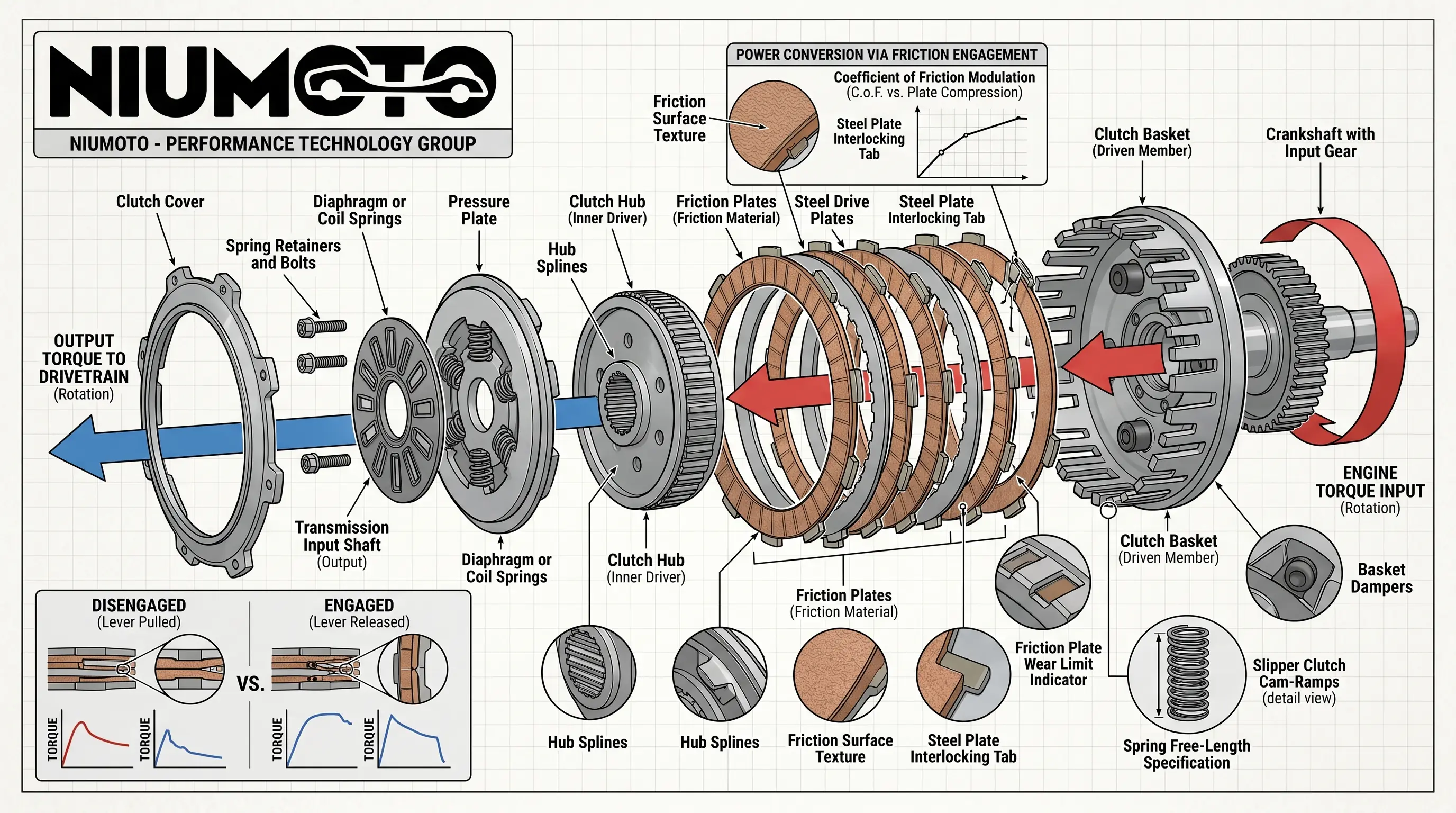
Before delving into the manufacturing process, it’s essential to understand the key components of a motorcycle clutch:
·Clutch Plates: Alternating friction and steel plates that engage and disengage to control power flow.
·Pressure Plate: Applies pressure to the friction plates, ensuring a firm connection between the engine and transmission.
·Clutch Basket: Houses the clutch plates and provides structural support.
·Release Mechanism: Includes the release bearing and fork, which disengage the clutch when the rider pulls the clutch lever.
Step-by-Step: The Clutch Manufacturing Process
1. Raw Material Selection and Preparation
The foundation of a high-performance clutch begins with the right materials:
·Friction Plates: Typically made from asbestos-free organic or sintered metal compounds, these materials offer optimal friction coefficients and heat resistance.
·Steel Plates and Pressure Plate: High-strength, heat-treated steel is used to withstand the immense forces generated during power transmission.
·Clutch Basket: Constructed from durable aluminum or steel alloys, it must maintain dimensional stability under high torque loads.
Raw materials are first cut into precise blanks using CNC (Computer Numerical Control) machines, ensuring uniformity and minimizing material waste.
2. Component Machining
This stage involves shaping the blanks into their final forms with micron-level precision:
·CNC Machining: Multi-axis CNC lathes and mills carve the clutch basket, pressure plate, and steel plates, creating intricate geometries such as splines, threads, and mounting holes.
·Surface Treatment: Components undergo processes like shot peening, which induces compressive stresses on the surface to enhance fatigue resistance, and phosphate coating, which improves corrosion resistance and lubrication.
3. Friction Plate Assembly
The heart of the clutch, the friction plates, requires meticulous assembly:
·Layering: Friction and steel plates are alternately stacked, with the first and last plates being steel to provide structural rigidity.
·Spring Installation: Coil springs are placed between the plates to maintain consistent pressure and ensure smooth engagement. In some high-performance clutches, diaphragm springs are used for more progressive engagement.
4. Precision Robotics in Assembly
Modern clutch manufacturing relies heavily on automation to achieve consistency and efficiency:
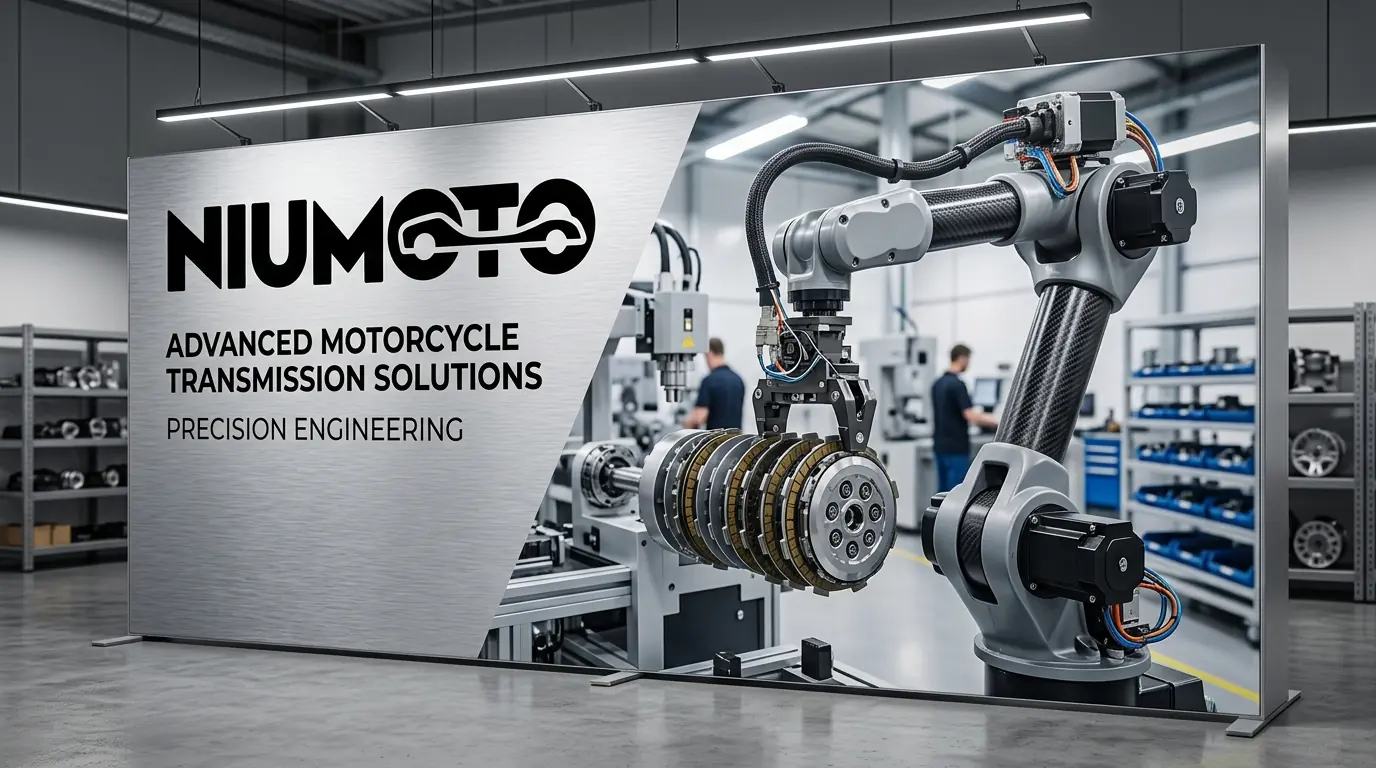
·Robotic Arm Assembly: As seen in advanced facilities like those of NIUMOTO, robotic arms with high-precision grippers handle and position components with sub-millimeter accuracy. They can perform repetitive tasks such as plate stacking and spring installation at speeds far exceeding human capabilities.
·Vision Systems: Integrated cameras inspect components for defects, measure dimensions, and verify correct assembly, ensuring that every clutch meets stringent quality standards.
5. Quality Control and Testing
Rigorous testing is conducted at multiple stages to guarantee reliability:
·Dimensional Inspection: Components are measured using coordinate measuring machines (CMMs) to ensure they meet tolerances as tight as ±0.01mm.
·Functional Testing: Assembled clutches undergo dynamometer tests, simulating real-world riding conditions to measure engagement smoothness, torque capacity, and heat dissipation.
·Durability Testing: Clutches are subjected to thousands of engagement cycles to simulate years of use, identifying potential wear points and ensuring long-term performance.
The Role of Advanced Engineering in Clutch Design
Companies like NIUMOTO, specializing in advanced motorcycle transmission solutions, push the boundaries of clutch technology through precision engineering:
·Finite Element Analysis (FEA): Engineers use FEA software to simulate stress, strain, and thermal behavior in clutch components under various loads, optimizing designs before physical prototyping.
·Lightweighting: By using materials such as carbon fiber-reinforced polymers and titanium alloys, manufacturers reduce clutch weight, improving acceleration and handling without compromising strength.
·Thermal Management: Advanced clutch designs incorporate cooling fins and heat-resistant coatings to dissipate friction-generated heat, preventing clutch fade during prolonged use.
The Future of Clutch Manufacturing
As motorcycles evolve, so does clutch technology:
·Smart Clutches: Integration with onboard electronics allows for adaptive clutch control, adjusting engagement based on riding conditions, such as slip control in wet environments or quick-shift functionality in performance bikes.
·Additive Manufacturing: 3D printing is being explored for producing complex clutch components with optimized geometries, reducing weight and improving performance.
·Sustainability: Manufacturers are increasingly adopting eco-friendly materials and energy-efficient production processes, aligning with global environmental standards.
Conclusion
The production of a motorcycle clutch is a testament to the marriage of art and science. From the careful selection of raw materials to the precision of robotic assembly and the rigor of quality testing, every step is designed to create a component that delivers reliability, performance, and safety. As technology continues to advance, the future of clutch manufacturing promises even more innovative solutions, ensuring that the clutch remains a critical enabler of the motorcycle riding experience.
Whether you’re a motorcycle enthusiast or an engineering aficionado, the next time you shift gears, take a moment to appreciate the intricate engineering that makes it possible. After all, behind every smooth ride is a clutch that has been crafted with precision, passion, and a commitment to excellence.
Disclaimer: This article is for informational purposes only. The manufacturing processes described are based on industry standards and may vary between manufacturers. Always refer to the manufacturer’s specifications and guidelines for specific products.